In 2013, I was three years into living with rheumatoid arthritis and also living alone for the first time. Until this point, I'd always had roommates or family living with me, and with all my friends graduating college or getting married or moving away, I felt the need to be on my own. So in the fall of 2013, I moved into a tiny cottage straight out of a fairytale. It was a small, one bedroom home nestled under a canopy of trees behind my landlord's house. There was a front porch, hardwood floors, and a peacock who lived next door and made crazy sounds. (Seriously look up peacock sounds.) Complete with a newly adopted puppy, it was heaven. An introvert's paradise. I could be quiet for hours without someone asking if I'm okay because I haven't said much. The rent was $750 and my salary at the time was about $1400 a month. For a twenty-one year-old, I felt like I had made it.
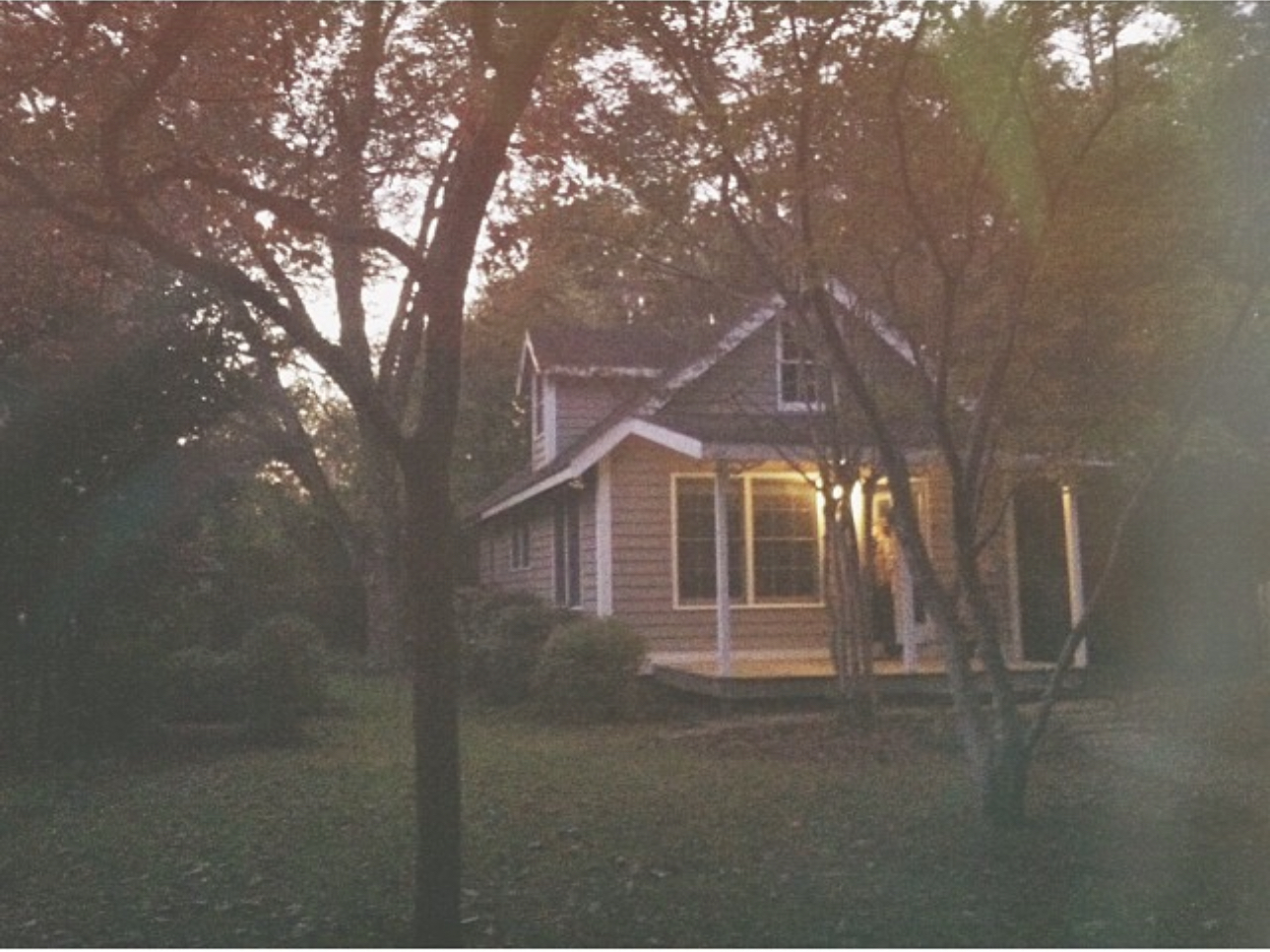
Remembering this cottage is bittersweet, because even though it was an incredible time of life, it nearly broke me. I hadn't thought about what it would mean to live alone with RA. My first experience with a rheumatologist in 2010 left a bad taste in my mouth — a doctor with zero bedside manner, six months of methotrexate and prednisone, and weight gain of about 40 pounds.
This was also the era that I truly believed God would heal me of rheumatoid arthritis (a story for another time). For these reasons I was no longer on any kind of treatment for RA other than forcing myself to go through periods of eliminating things like gluten, sugar, and caffeine from my diet to see if that would cure me.
Eventually the disease became so unbearable that I decided to see a doctor again. There was only one rheumatologist in our town, and I already knew he was the worst, so I went to my childhood primary care doctor instead. He was uneducated about rheumatoid arthritis and didn't have much help to offer other than a prescription for sulfasalazine and a big (BIG) bottle of hydrocodone with an almost unlimited number of refills. I gladly filled both prescriptions and set my hopes on better days.
What I didn't realize until years later, was that I was incredibly depressed at this time. My daily routine consisted of waking up at 7 AM and immediately hobbling to the bathroom so I could run my hands under hot water. I didn't need to be at work until 9 AM, and my commute was only 15 minutes, but it took a long time to get myself ready in the mornings. Ten minutes to try and unfurl my hands from the "claw", twenty minutes to run a brush through my hair and pin my front pieces back, thirty minutes to figure out how to get dressed, another thirty minutes to feed my dog and let her in the front yard to pee and say hello to the sun. I always looked forward to my coffee because the mug was warm and felt nice in my hands. By the time I'd get to work, I was already exhausted.
The work day was always an anxiety filled-nightmare. I worked at a large church in my area as an administrative assistant. Most of my coworkers were wonderful, but we didn't have any kind of HR department and requests for accommodations were met with snark and what seemed to be disbelief that I was even asking. I felt completely alone and it took all of my energy to mask the pain and make sure I wasn't limping down hallways noticeably. At the end of the day I would walk to my car, get in, and cry all the way home.
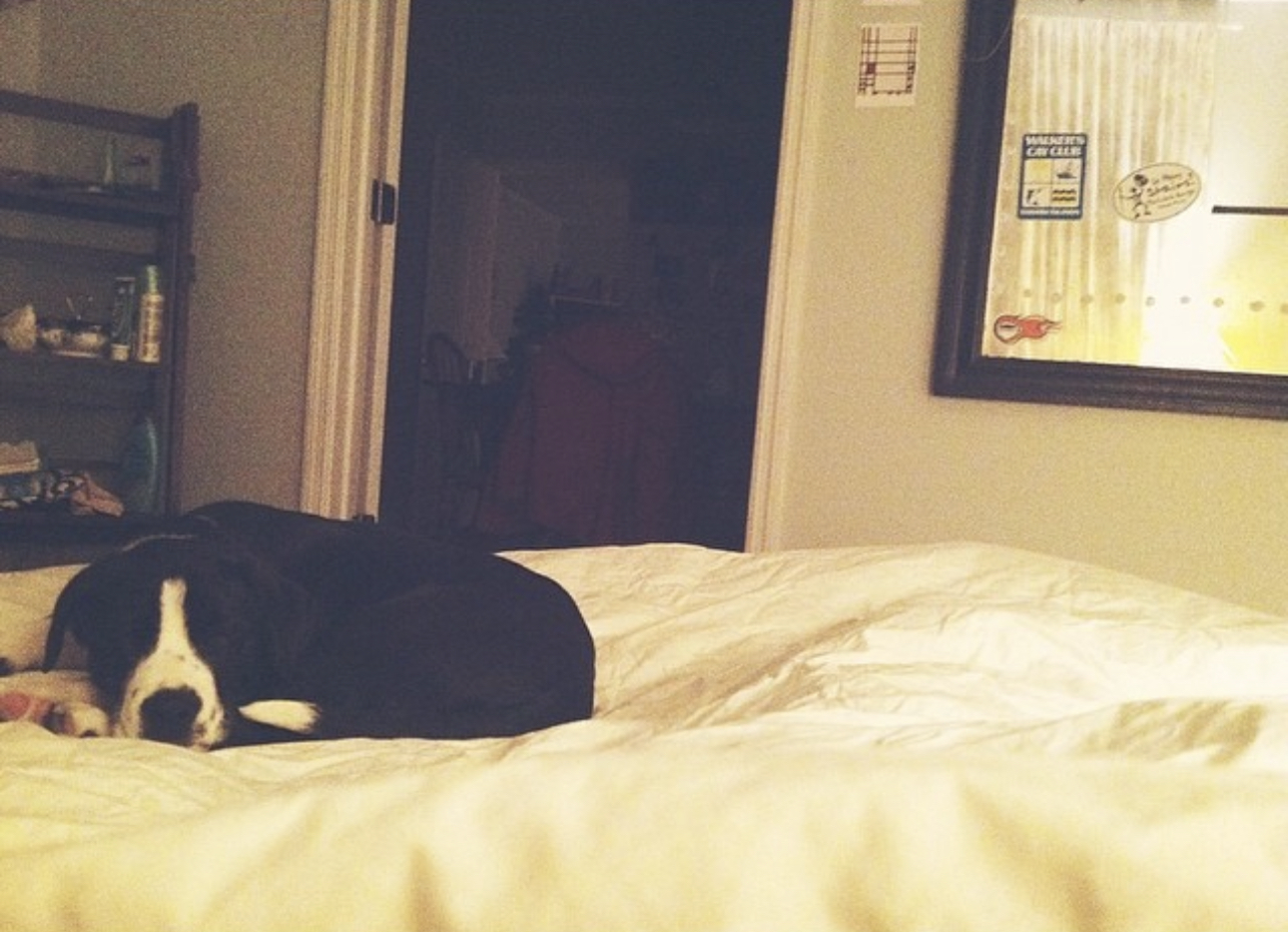
The light of my life during this time, was my dog, Annie. When my boyfriend and I first adopted her, I considered returning her because I didn't think I could take care of her in the state I was in. But my boyfriend encouraged me to keep her and I'm glad I did. In the evenings, I'd take her on long walks through the woods next to our cottage if I was feeling up to it. She made me laugh and kept me focused on something other than myself. It helps to care for people, animals, and things when you're depressed.
My grocery budget at the time was...not a lot. We had a Trader Joe's and I could usually scrape by for about $25 a week, mostly due to the fact that I couldn't really feed myself after work. By the time 6 PM rolled around, my hands would flare, scrunching up like a spider's legs do when it's dying. If there was a frozen meal left to pop in the microwave, I'd eat it.
I think I lost something like 50 pounds within the first six months I lived alone. People would ask if I'm okay and I never had the heart to say no. A few women from my church noticed I was losing weight and started a meal train for me, totally unprompted. My mom and grandmother would also drop food off and send me home with groceries every once in a while but it was near impossible to open packages and prepare meals. On most nights, I went to bed hungry.
There is one moment from this period of life that I think about frequently. You know those formative moments that stick with you? As Inside Out calls them — core memories. It was a January night and I was in a severe flare. I woke up around 3 AM and needed to pee, but in the time I'd been asleep almost every joint in my body had frozen. My legs didn't work, my arms didn't work, my hands were closed tight in little balls. I wailed in pain at every movement and every breath, feeling embarrassed even though no one was there to witness.
The bathroom was only about seven feet from my bed and I knew I wouldn't be able to hold it much longer. For a disease that had already stolen so much of my dignity, I wasn't about to pee on myself and sleep in it. Moving at a snail's pace, I began to lift the sheet off of my body so I could begin the process of rolling off the bed. In severe RA flares, the weight of a topsheet feels like a thousand pounds of molten lava on the skin and joint.
I quickly realized my feet couldn't withstand any amount of weight and began to sink onto the bedroom floor. Fuck. I had to think for a minute about how I would get to the bathroom. I remember thinking "well, now you either have to make it to the bathroom, or you have to get back in bed and both are going to fucking suck." It ended up taking me an hour and a half to inch and writhe my way across seven feet to the threshold of the bathroom — move a few inches, pause to breathe and collect myself, attempt to move again, repeat.
I eventually made it to the base of the toilet seat and found the determination to pull myself onto the rim, and from there leveraged myself against the sink and the toilet until I could sit. The only phrase running through my head was "what in the actual fuck is my life right now."
I sat hunched over on the toilet long after I had finished peeing, catching my breath and contemplating why I should be alive at all if this is what my life has become — until I finally fell asleep right where I was, my dog curled up beside me.
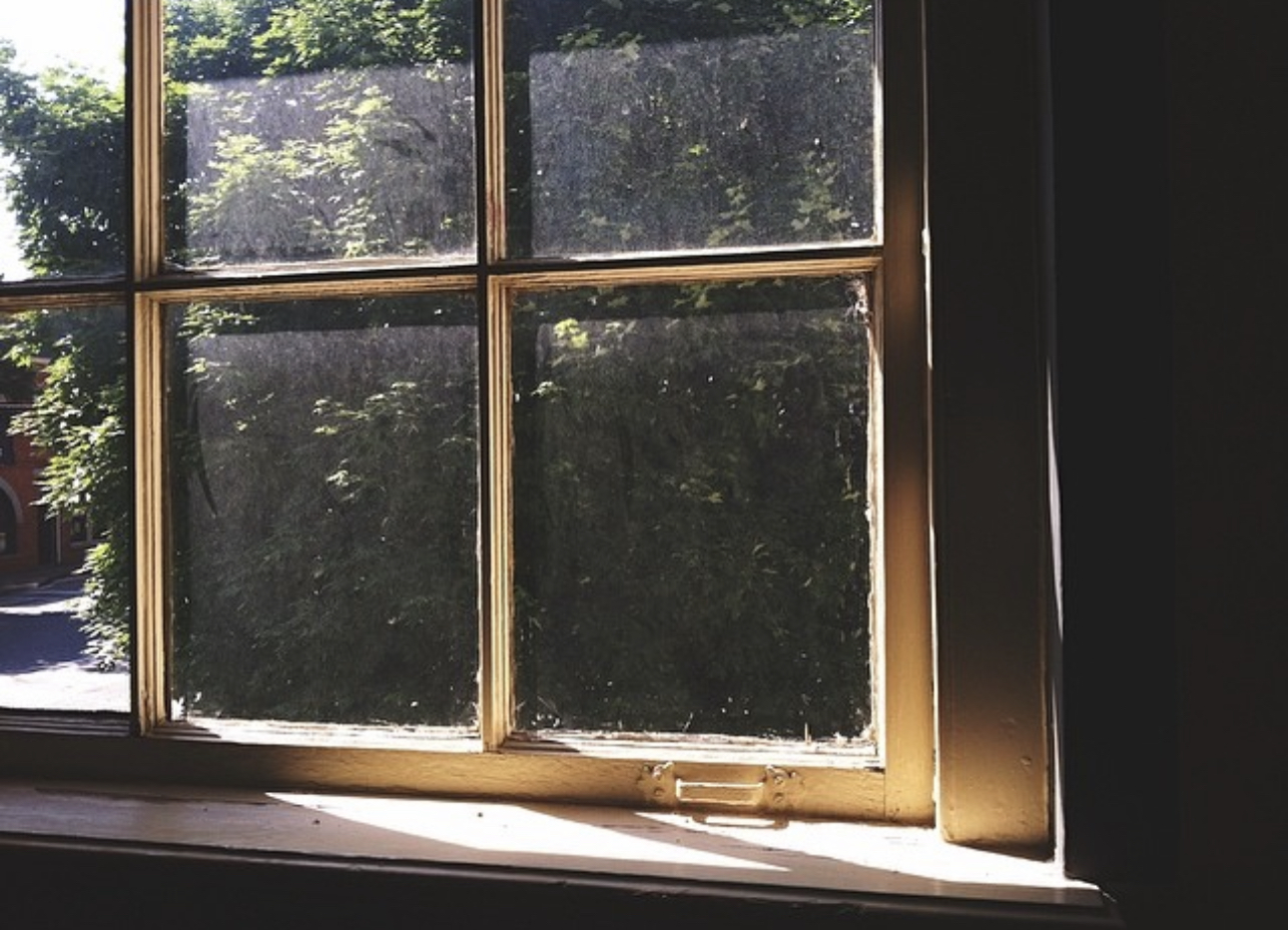
The light of morning eased itself onto the bathroom wall, the shadows of leaves dancing around me. I could hear the birds, I could feel my dog's cold nose nudging me to feed her, and I could feel that much of the flare had begun to subside. Collapsing into myself, I wondered how I could continue on like this, and perhaps more concerning, why I should continue on.
Despair didn't just come for a visit that night, it moved in and stayed for another year. I came to believe that the life I dreamed for myself was no longer possible and instead of hoping for a better future, I lived in certain anticipation of how my life would dissolve into nothing.
I fought rheumatoid and depression day after day, month after month. I made myself look for light in little places. In the early mornings I'd stare at the oranges on my table and awe at their color, their smell, how lucky I was to have something as good as an orange at my fingertips. I survived on small observations, until eventually...the debilitating flares and the weight of depression just seemed to...lift.
One day I woke up and the world seemed brighter, my body felt looser, and it was easy to laugh and feel gratitude. So much so that I began gaslighting myself in the weeks to follow. "Was it really that bad?" I now know that was a trauma response — my body doing it's best to help me forget.
But always in the back of mind was the thought "when will the good things end". It's like the opening scene in Dune where after decades of oppression, the Harkonnens leave Arrakis. And as Chaney remarks, "who will our next oppressors be?"

If you live with chronic illness long enough, you begin to see patterns. Peaks of remission followed by valleys of flares and complications. Moving forward five steps to be pushed back six. I used to feel silly hoping for anything at all, because the only thing in my life that seemed to be an absolute guarantee, was that there were no guarantees. But there's the light at the end of the tunnel — there are no guarantees.
As a Christian, hope meant a lot to me and I had a very specific idea of what it is and does. I believed that hope was the thing which compelled us to keep our eyes set on better things. Like we're destined to be someone great, do something great, have something great, and if you can maintain hope then eventually you will receive the prize once and for all. I believed that there was one valley to climb out of, and if you make it, the rest of your life is a high plateau.
It's an inescapable fact that life will change, for the good and for the bad, without your permission — which can be a scary thought. The lack of control, the uncertainty that haunts you. Even so...do you know what I say to myself when I'm in a season of despair? Now I say "thank god I don't know what's coming next."
You could be certain your future will suck, but that would be silly wouldn't it? Because you don't know the future. And that's what hope is — not knowing.
I don't have a great ending to this story, probably because it's still being written, but if you related to any of this at all, just know that life did get better for me and it will get better for you. I don't know when. I don't know how many waves will knock you over or carry you to shore. I don't know how many nights you'll crawl to the bathroom or how many mornings you'll force yourself to see the beauty in an orange, but you'll get better. You'll get worse at times, but you'll eventually get better.
You're allowed to be in despair. Just don't let it steal your hope.

Meet Ellen, a chronic illness advocate and the founder of Flare Family. Since developing Rheumatoid Arthritis in 2010, she's dedicated herself to empowering others navigating similar journeys through her TikTok account, @ellenwitharthritis. Led by compassion, she is working to build a community where everyone feels heard, understood, and uplifted.
Ellen is a graphic and web designer who enjoys spending time with her partner, Jarrod, and soul dog, Dolly. Her not so guilty pleasures are Bravo reality shows, donuts, and finding great hiking spots.
Have questions about Flare Family? Need advice about living with Rheumatoid Arthritis? I'm here to connect with you and answer your questions!
Are you a writer? Do you have a story to tell or advice to give? I'm always looking for guest authors. If you're interested in writing a blog post for Flare Family, contact me via email or this form.
ellen@flarefamily.com


.png)