.png)
01.
Your immune system is supposed to protect you from all kinds of bad stuff. When your immune system detects something that doesn't belong in your body, it creates antibodies to destroy that thing.
Autoimmune diseases like RA occur when your immune system mistakenly attacks healthy parts of the body. You can think of it like a major miscommunication error.
Rheumatoid arthritis is a chronic, systemic autoimmune disease characterized by inflammation of the synovial lining of joints, which can lead to pain, swelling, stiffness, and progressive joint destruction.
The disease may be seropositive (with detectable autoantibodies such as anti-citrullinated protein antibodies) or seronegative (without these antibodies).
.png)
02.
Your body has thousands of proteins — they all have important jobs and naturally undergo changes over time. Normally, your immune system recognizes them as safe.
But in rheumatoid arthritis, certain proteins can be mistakenly flagged as threats, and the immune system may produce antibodies that contribute to inflammation. These include anti-citrullinated protein antibodies (anti-CCP or ACPA), which target modified proteins, and rheumatoid factor (RF), which targets other antibodies.
Some people with RA do not have these antibodies, but their immune system is still attacking joint tissues. If you want to learn more about the difference between seronegative and seropositive patients, visit arthritis.org
.png)
03.
We know RA as a joint disease, but it's really a full-body disease.
The immune response is systemic, meaning it can affect any part of your body including your skin, brain, lungs, heart, eyes, and nerves.
Some surprising body parts that might flare are the jaw, neck, chest, groin, and throat! RA can even cause hoarseness in the voice due to inflammation near the vocal cords.
04.
Although RA can affect the whole body, inflammation is usually strongest in the joint lining, called the synovium.
The synovium is a special layer that protects your joints and helps provide them with nutrients. Normally it works quietly in the background, but in RA, immune cells flood in and set off an alarm.
Once the alarm is triggered, more immune cells keep arriving and the synovium itself joins the response. It’s like calling 911 over and over — the signal just keeps repeating, creating a cycle of swelling and pain in the joints.
.png)
05.
The immune system targets the lining inside your joints, called the synovium. This lining normally produces fluid that helps joints move smoothly. When it’s attacked, it becomes inflamed, thickened, and irritated.
That inflammation:
This is why RA can be progressive if untreated. Not all patients progress to the later stages of RA and it's becoming less common with the advancement of medicine and integrated therapies like diet and exercise.
.png)
06.
Something — genetics, environmental factors, a mix of both — triggered this miscommunication between proteins and your immune system.
Scientists have identified a number of factors that increase your risk for developing RA such as smoking, obesity, being female, and certain genetic markers.
But is there one clear reason why you have RA? Not really.
.png)
07.
Because there isn't one singular cause, there isn't a known cure yet.
However, science has come a long way and medications are now really good at helping to correct the miscommunication between your body and your immune system.
Remission is possible for many RA patients! Remission means something different to everyone — for some people they define it as
Sometimes you can experience long periods of remission, either from medication or sometimes naturally, and then relapse. Relapse can happen due to
When medication stops working, you will usually work with your doctor to find a new treatment plan.
.png)
08.
Inflammation caused by Rheumatoid Arthritis is not the same as general inflammation you hear folks talk about — like when you eat too much sugar or drink too much alcohol.
The inflammation caused by RA is a communication problem on a cellular level.
Diet can help support overall health and may help manage symptoms, but it does not cure RA or replace medically proven treatments.
In periods of low disease activity, or for patients with a mild presentation of RA, diet can help manage symptoms. Many patients with moderate to severe RA report diet having very little affect on disease activity.
You can learn more about the supportive benefits of certain foods for managing RA here.
09.
The information on this page is based on guidance and research from leading medical and public health organizations. Rheumatoid arthritis is a complex autoimmune disease, and this content is intended for education — not medical diagnosis or treatment.
National Institutes of Health (NIH) – National Institute of Arthritis and Musculoskeletal and Skin Diseases (NIAMS)
NIAMS explains rheumatoid arthritis as a systemic autoimmune disease characterized by chronic inflammation of the synovial lining of joints, leading to cartilage and bone damage. It also documents widespread effects beyond joints, including fatigue, anemia, cardiovascular disease, lung involvement, and eye inflammation.
niams.nih.gov
American College of Rheumatology (ACR)
The ACR describes rheumatoid arthritis as an immune-mediated inflammatory disease driven by abnormal immune signaling, autoantibodies (including rheumatoid factor and anti-CCP antibodies), and inflammatory cytokines. It details synovial inflammation, pannus formation, immune cell infiltration, and the importance of early treatment to prevent irreversible damage.
rheumatology.org
Arthritis Foundation
The Arthritis Foundation emphasizes that rheumatoid arthritis affects the entire body, not just joints. It highlights systemic inflammation, fatigue, immune dysregulation, and the role of the synovium in sustaining inflammation and joint damage.
arthritis.org
National Health Service (NHS – UK)
The NHS defines rheumatoid arthritis as a long-term autoimmune condition that can affect joints as well as organs such as the lungs, heart, and eyes. It documents systemic symptoms including fatigue, pain, stiffness, and inflammation throughout the body.
nhs.uk
National Library of Medicine (PubMed / NIH)
Peer-reviewed research reviews explain the molecular mechanisms of rheumatoid arthritis, including immune complex formation, complement activation, macrophage recruitment, cytokine signaling (TNF, IL-6), and bone erosion mediated by osteoclast activation.
ncbi.nlm.nih.gov
Symptoms of RA exist on a spectrum — sometimes the symptom is tolerable, sometimes the symptom is intolerable and makes it impossible to live a normal life. Visit the Flares tab to learn more about symptoms can fluctuate throughout the day or week.
01.
Joint pain in rheumatoid arthritis comes from inflammation inside the joint itself. When your immune system attacks the synovium — the thin lining that helps joints move smoothly — it becomes swollen and irritated.
This pain might feel like:
The 1-10 pain scale isn't an effective way for RA patients to describe pain because our capacity for pain is always increasing.
For example, a few years ago you might have classified your worst RA pain as a 10, but now it's more like an 8 because you've now felt even worse pain.
.png)
02.
Joint immobility is a severe and often misunderstood symptom of rheumatoid arthritis.
During intense inflammation or flares, swelling inside the joint can become so significant that the joint cannot move at all — not because of muscle weakness, but because the joint space itself is overwhelmed by inflammation.
This can temporarily lock entire parts of the body, such as hands, wrists, knees, or shoulders, making basic actions like walking, dressing, or holding objects impossible until inflammation decreases.
This level of immobility reflects active disease and is a clear sign that RA is more than “just stiffness.”
.png)
03.
Joint stiffness in rheumatoid arthritis is caused by inflammation inside the joint lining that makes movement feel tight, resistant, or painful — especially after rest.
This is most noticeable in the morning or after sitting still, and it often lasts 30 minutes or longer, unlike typical stiffness that eases quickly.
While stiff joints may still be movable, they can feel slow to “wake up,” making everyday tasks like gripping objects or standing up feel harder than usual.
.png)
04.
Feeling exhausted is a very real part of RA — and it’s not just because of pain.
Chronic inflammation releases immune signals into the bloodstream that can affect your energy systems, leading to deep fatigue and a sense of heaviness or low motivation that doesn’t always improve with rest.
Many people describe it as feeling flu-like or truly tired in a way that impacts daily life.
.png)
05.
“Brain fog” is a common non-joint symptom of RA that describes difficulty concentrating, remembering things, or thinking clearly.
Although the exact mechanism isn’t fully understood, it’s believed to be related to chronic systemic inflammation and immune-mediated signaling in the nervous system.
Over time, these immune signals can affect mental clarity, especially during flares.
.png)
06.
Some people with RA notice that their skin becomes more sensitive, tender, or reactive.
This isn’t the kind of sensitivity from a rash or infection — rather, it reflects how the immune system’s inflammatory signals in RA can also affect nerve endings and skin tissue, making light touch feel uncomfortable.
Sensitive skin may be more noticeable around joints but can occur elsewhere too.
.png)
07.
Low-grade fevers are a subtle but important sign that RA is affecting your whole body.
Fevers in RA tend to be mild — just a few tenths above normal — and often occur during disease flares when systemic inflammation ramps up.
These fevers are caused by inflammatory cytokines circulating in your bloodstream and are a reminder that RA is more than “joint pain.”
.png)
08.
Because rheumatoid arthritis involves widespread immune signaling, it can cause aches and pains beyond the joints.
These full-body aches may resemble flu symptoms and can occur even on days when joint swelling isn’t obvious.
They’re tied to the same inflammatory processes that drive fatigue, malaise, and low-grade fevers.
09.
The information on this page is based on guidance from trusted medical and research organizations specializing in rheumatoid arthritis and autoimmune disease, including:
American College of Rheumatology (ACR)
rheumatology.org
Clinical guidelines and patient education resources on rheumatoid arthritis diagnosis, symptoms, and treatment.
Arthritis Foundation
arthritis.org
Educational materials on rheumatoid arthritis symptoms, disease progression, and daily management strategies.
National Institute of Arthritis and Musculoskeletal and Skin Diseases (NIAMS)
niams.nih.gov
Research-backed information on autoimmune and inflammatory arthritis conditions, including rheumatoid arthritis.
National Institutes of Health (NIH)
nih.gov
Peer-reviewed research and public health resources related to autoimmune disease and chronic inflammation.
This content is intended for educational purposes only and should not replace professional medical advice, diagnosis, or treatment.

01.
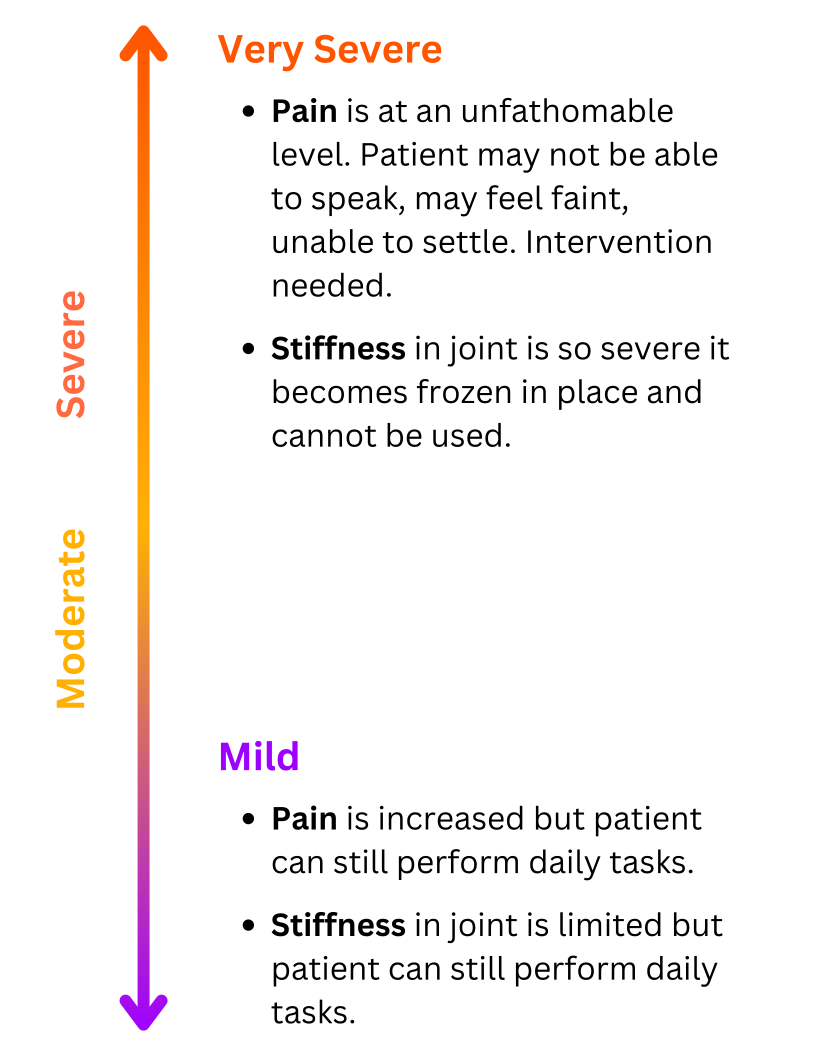
People with RA live with what they consider a normal level of symptoms. Any increase in frequency or severity of these symptoms is called a flare.
Flares can include some or all of the symptoms of Rheumatoid Arthritis. The most troublesome are often the combination of joint pain and stiffness which cause temporary disability.
Flares reflect a period when inflammatory activity increases, which may be measurable through symptoms, joint exam findings, or lab markers such as ESR or CRP.
People who do not live with Rheumatoid Arthritis may be surprised to learn how much pain an RA patient can endure.
They may also be surprised to learn that swelling can lock joints in place, leaving the patient unable to move entire parts of the body.
02.
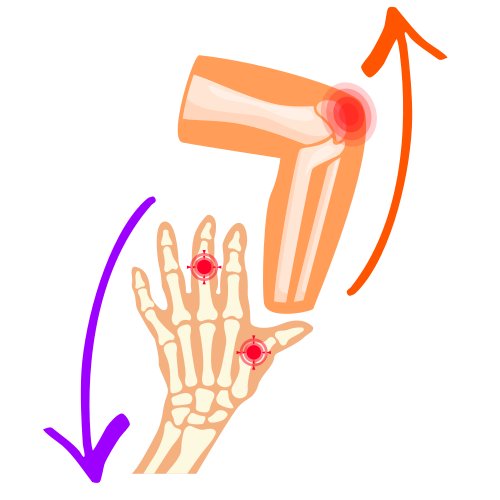
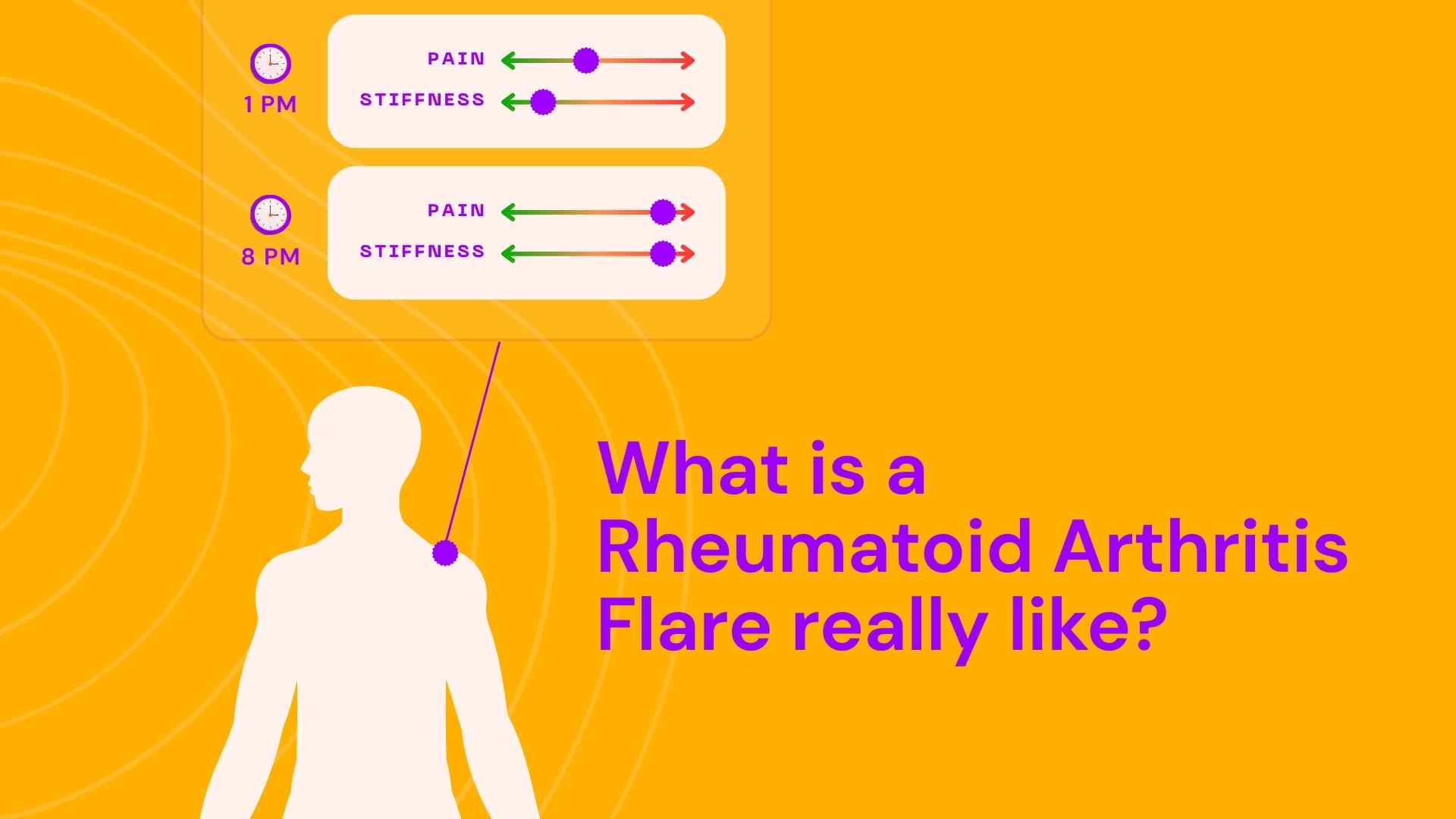
Pain and stiffness levels can vary between joints, and the severity of those levels can change quickly.
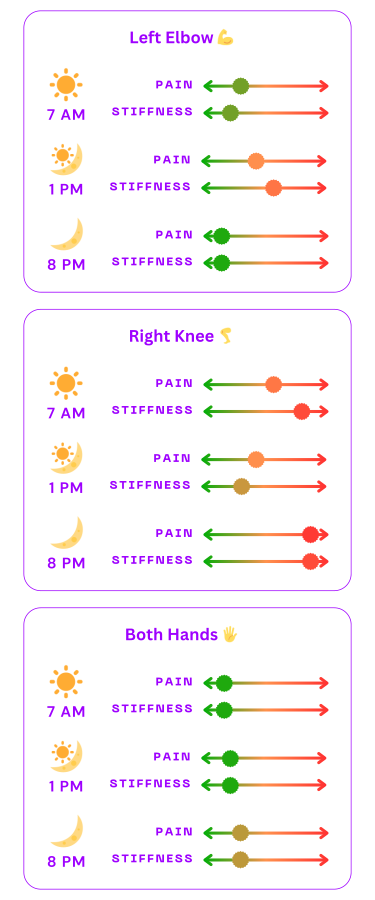
If the elbow and knee are in a flare, they might have wildly different levels of pain and stiffness throughout the day.
New joints can quickly become part of the flare, while other joints seem to magically get better.
The chart below provides a visual of how each joint can change throughout the day.
The left elbow started mild, became worse in the afternoon, then got better around evening.
The right knee started severe, got a little better in the afternoon, then became very severe in the evening.
The hands sustained mild levels of pain and stiffness throughout the day.

03.
"I have to cancel, sorry."
"I won't be able to make it to work."
"I'm so sorry, I need to back out of my commitment."
These are unfortunate realities for RA patients because flares can begin suddenly — sometimes in less than an hour.
Flares can also resolve rapidly, sometimes going away overnight.
This rapid change can feel confusing and discouraging, especially if someone was previously well controlled on medication.
People living with RA are often mislabeled as flaky, unreliable, lazy, or liars because it's hard to believe a body can change so quickly.
Flares can last hours, days, weeks, or months.

04.
During a flare, everyday tasks can become difficult or impossible:
RA flares often reduce physical function because inflamed joints lose mobility. The increased pain and stiffness can make routine self-care or work tasks temporarily impossible.
This temporary loss of function is a recognized aspect of active disease and is part of how rheumatologists assess disease severity.

05.
While flares themselves are temporary, uncontrolled inflammation over time can cause permanent joint damage.
The National Institute of Arthritis and Musculoskeletal and Skin Diseases explains that persistent inflammation can erode cartilage and bone. Repeated or prolonged flares increase the risk of:
This is why modern RA treatment focuses on achieving remission or low disease activity — not just symptom relief, but prevention of long-term damage.
Not all patients progress to the point of permanent disability and it's becoming less common with the advancement of medicine and integrated therapies like diet and exercise.

06.
OTC pain medication and at-home therapies like cold packs do a good job at relieving symptoms in a mild flare.
Moderate to severe flares are often impossible to treat effectively at home. OTC NSAIDS and at-home therapies are not strong enough to combat the pain and joint stiffness.
Persistent and severe flares often require medical intervention. This may include:
Home remedies may support comfort — but they cannot stop autoimmune-driven inflammation on their own. It is imperative that RA patients reach out to their rheumatologist when a flare feels unmanagable at home.
07.
Flares often signal that rheumatoid arthritis is not fully controlled.
Rheumatologists assess disease activity using:
Frequent flares may indicate the need to adjust treatment. The American College of Rheumatology supports a “treat-to-target” approach — meaning therapy is adjusted until remission or low disease activity is achieved.
In other words: flares are clinically meaningful. They are not imaginary. They are not exaggerations. They are evidence of active disease.

08.
Many patients report triggers such as:
However, research shows that flares can occur without an identifiable cause. Sometimes the immune system simply becomes more active without a clear external trigger.
This unpredictability can feel frustrating — but it does not mean someone did something wrong.
09.
The information on this page is based on guidance and research from leading medical and public health organizations. Rheumatoid arthritis is a complex autoimmune disease, and this content is intended for education — not medical diagnosis or treatment.
American College of Rheumatology. (2021). 2021 American College of Rheumatology Guideline for the Treatment of Rheumatoid Arthritis. Arthritis Care & Research, 73(7), 924–939.
https://rheumatology.org/rheumatoid-arthritis-guidelines
American College of Rheumatology. Rheumatoid Arthritis.
https://rheumatology.org/patients/rheumatoid-arthritis
Arthritis Foundation. Rheumatoid Arthritis.
https://www.arthritis.org/diseases/rheumatoid-arthritis
Arthritis Foundation. Managing RA Flares.
https://www.arthritis.org/health-wellness/treatment/treatment-plan/disease-management/managing-ra-flares
National Institute of Arthritis and Musculoskeletal and Skin Diseases (NIAMS). Rheumatoid Arthritis.
https://www.niams.nih.gov/health-topics/rheumatoid-arthritis
National Institute of Arthritis and Musculoskeletal and Skin Diseases (NIAMS). Rheumatoid Arthritis: Diagnosis, Treatment, and Steps to Take.
https://www.niams.nih.gov/health-topics/rheumatoid-arthritis/diagnosis-treatment-and-steps-to-take
Smolen, J. S., Landewé, R. B. M., Bijlsma, J. W. J., et al. (2020). EULAR recommendations for the management of rheumatoid arthritis with synthetic and biological disease-modifying antirheumatic drugs: 2019 update. Annals of the Rheumatic Diseases, 79(6), 685–699.
https://ard.bmj.com/content/79/6/685
Rheumatoid Arthritis is an autoimmune disease, and the trouble with autoimmune diseases is that they all look pretty similar. Joint pain isn't just an arthritis thing — it is a symptom of many diseases!
For this reason it's important for doctors to rely on a few "hallmarks" of rheumatoid arthritis. These are the symptoms that aren't really seen in other diseases, or aren't seen as consistently.
It can be frustrating if your doctor seems to only be focused on the signs listed below, but it's usually because they serve as clues that can guide you to a diagnosis.
.png)
01.
RA frequently starts in the small joints of the hands and feet, especially the fingers, wrists, toes, and balls of the feet.
Many people notice stiffness, swelling, or pain in these areas before larger joints are involved.
This early pattern is a key reason everyday tasks—like buttoning clothes or walking first thing in the morning—can suddenly become difficult.

02.
One of the most defining features of rheumatoid arthritis is symmetry. If a joint is affected on one side of the body, the same joint is often affected on the other side.
For example, pain or swelling in the right wrist commonly appears in the left wrist as well. This mirror-image pattern is much less common in other autoimmune or inflammatory conditions.
03.
While many conditions cause joint pain, RA is known for morning stiffness that lasts an hour or longer. This stiffness isn’t just soreness—it can feel like the joints won’t move or “unlock” until the inflammation settles.
This duration helps distinguish RA from mechanical joint issues or overuse injuries.
.png)
04.
RA symptoms often follow a flare pattern, where inflammation increases for days or weeks and then partially improves.
These flares can be triggered by stress, illness, hormonal changes, or sometimes nothing obvious at all.
This fluctuating nature can make RA confusing and emotionally exhausting, especially early on.
American College of Rheumatology (ACR)
Rheumatoid Arthritis Overview, Symptoms, and Diagnosis
https://rheumatology.org/patients/rheumatoid-arthritis
Arthritis Foundation
What Is Rheumatoid Arthritis?
https://www.arthritis.org/diseases/rheumatoid-arthritis
National Institute of Arthritis and Musculoskeletal and Skin Diseases (NIAMS) — NIH
Rheumatoid Arthritis
https://www.niams.nih.gov/health-topics/rheumatoid-arthritis
Centers for Disease Control and Prevention (CDC)
Rheumatoid Arthritis (RA)
https://www.cdc.gov/arthritis/types/rheumatoid-arthritis.htm
Johns Hopkins Arthritis Center
Rheumatoid Arthritis Signs and Symptoms
https://www.hopkinsarthritis.org/arthritis-info/rheumatoid-arthritis/
Mayo Clinic
Rheumatoid Arthritis: Symptoms and Causes
https://www.mayoclinic.org/diseases-conditions/rheumatoid-arthritis/symptoms-causes
Rheumatoid arthritis (RA) is diagnosed based on a combination of symptoms, medical history, physical exams, blood tests, and imaging — not a single test alone. This is important, because RA can look different from person to person, especially early on.
Doctors look for patterns that are characteristic of RA, such as persistent joint inflammation, symmetrical symptoms, and involvement of small joints in the hands and feet. Blood tests may include markers of inflammation (like ESR or CRP) and autoantibodies such as rheumatoid factor (RF) or anti-CCP antibodies, which are strongly associated with RA — though not everyone with RA will test positive.
Imaging tests like X-rays, ultrasound, or MRI can help identify inflammation in the joint lining (synovium) or early joint damage, even before it’s visible from the outside.
Because RA is a systemic autoimmune disease, diagnosis focuses on understanding the whole pattern of disease — not just whether a joint hurts today. Early diagnosis matters: the sooner RA is identified, the better the chance of slowing or preventing long-term joint damage.
There is no cure for rheumatoid arthritis, but effective treatment can control inflammation, reduce symptoms, protect joints, and improve quality of life. According to the American College of Rheumatology (ACR), the goal of RA treatment is remission or low disease activity — not just pain relief.
The ACR recommends a treat-to-target strategy, which means treatment is adjusted regularly until a clear goal (remission or low disease activity) is reached. This approach recognizes that RA is active beneath the surface, even when symptoms fluctuate.
Treatment is typically integrated, combining medication with lifestyle and supportive care.
Most people with RA are treated with disease-modifying antirheumatic drugs (DMARDs), which address the underlying immune dysfunction — not just symptoms.
The ACR emphasizes starting DMARDs as early as possible, because untreated inflammation can lead to permanent joint damage.
Integrated RA care goes beyond prescriptions.
This may include:
These supports don’t replace medication — they work with it.
RA is not static. Symptoms, inflammation levels, and treatment responses change over time.
That’s why the ACR recommends regular follow-ups and treatment adjustments, guided by symptoms, lab markers, and functional impact — not just how someone “looks” in the exam room.
Effective treatment is proactive, not reactive.
A helpful way to think about RA treatment is this:
RA treatment isn’t about chasing pain — it’s about calming an overactive immune system before it causes lasting damage.
With early diagnosis, integrated therapy, and ongoing care, many people with RA are able to reduce flares, preserve joint function, and live full, active lives.



.png)



.png)
.png)
.png)
.png)