For a long time, I struggled to explain to people what was actually happening to my body during a rheumatoid arthritis (RA) flare.
I knew what it felt like — the pain, the stiffness, the unpredictability — but putting that experience into words that made sense to someone who didn’t live in my body felt impossible. A few years ago, I finally sat down and wrote it all out. I created visuals, metaphors, and explanations that helped bridge the gap between lived experience and understanding.
This post is that explanation.
(You can also find this information on my website as a free downloadable resource, including a Part Two that goes even deeper.)
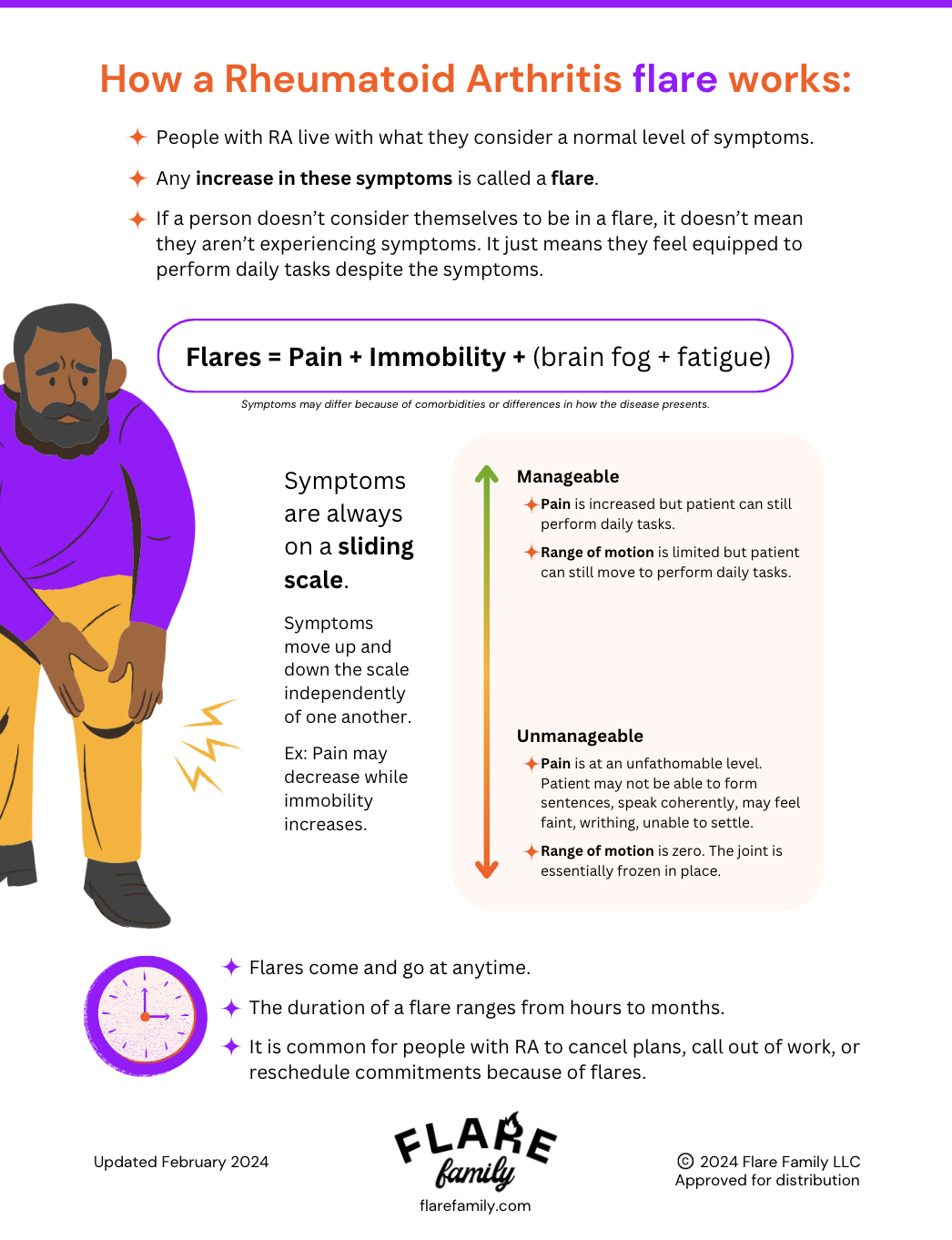
Most people with rheumatoid arthritis live with a baseline level of symptoms. This becomes our “new normal.”
That baseline can include:
A flare is an increase in these symptoms — sometimes subtle, sometimes severe, sometimes life‑altering.
One of the hardest parts of rheumatoid arthritis is how unpredictable flares can be.
A flare can last:
Flares can also start very suddenly. You might wake up feeling okay, go to work, and by the end of the day be unable to drive home because your knee, hip, or foot flared without warning.
A flare may affect:
This is why people with RA often cancel plans, hesitate to commit to future events, and are sometimes misunderstood or accused of exaggerating.
Because symptoms fluctuate so quickly, someone might see you struggling one day and doing something fun the next.
From the outside, that can look inconsistent.From the inside, it’s just reality.
RA symptoms don’t follow a predictable pattern — and that inconsistency is part of the disease itself.
To explain what’s happening during a flare, imagine a scale.
Pain exists on a spectrum:
Stiffness also exists on a spectrum:
Here’s the key part:
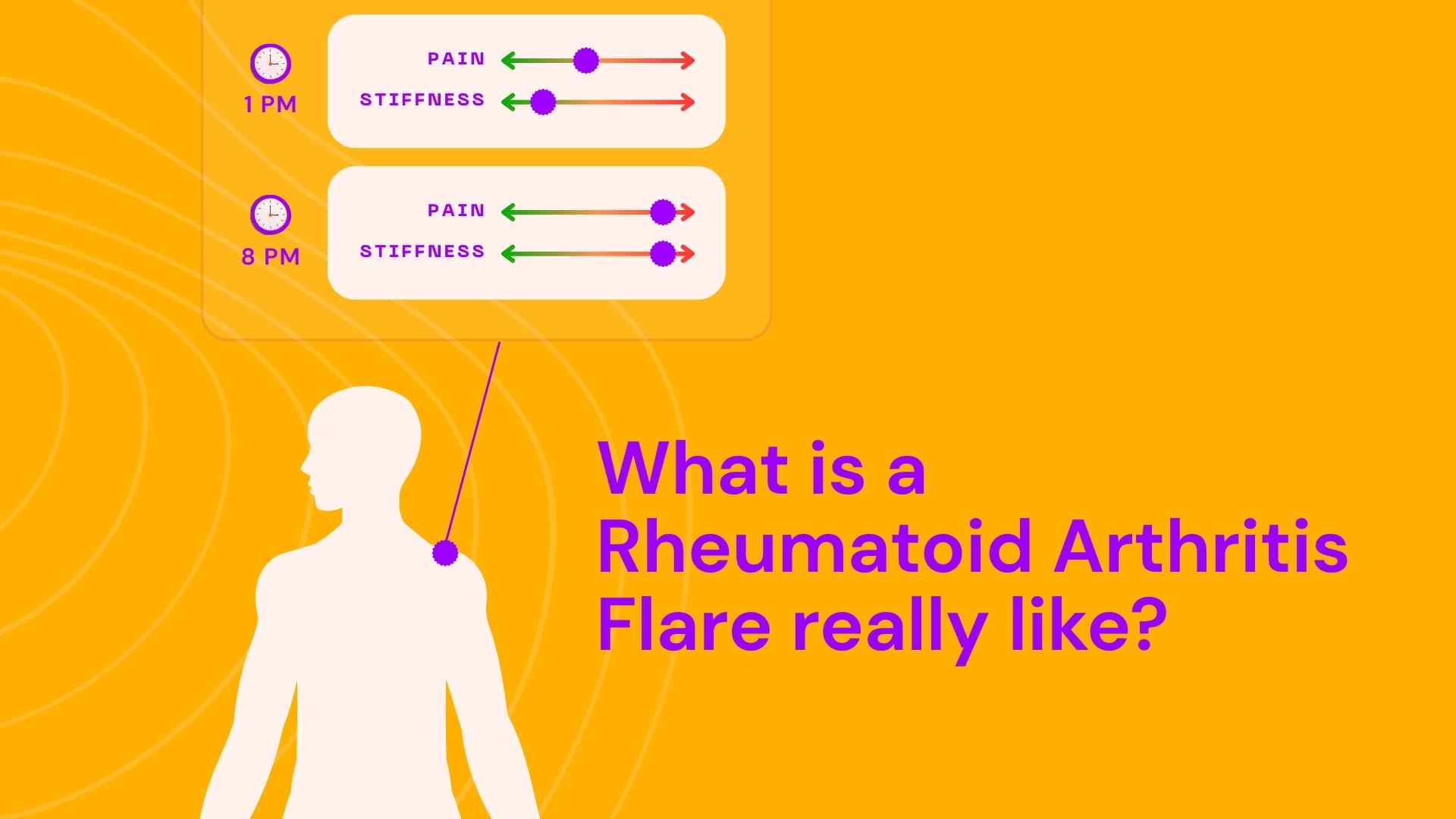
Pain and stiffness don’t always increase together.
You might have:
Now imagine this scale doesn’t exist just once — it exists for every single joint in your body.
Each joint is doing its own thing.
You might wake up with:
By evening:
Some people notice certain times of day when symptoms tend to worsen, but many flares don’t follow any recognizable pattern at all.
That unpredictability is one of the most exhausting parts of RA.
It’s important not to let flares go untreated for long periods of time.
If you’re experiencing a flare that you can’t manage at home for more than a few days, it’s important to contact your rheumatologist.
Your doctor may need to:
Active flares can mean active joint damage — and damage from rheumatoid arthritis is not reversible.
Getting help early matters.
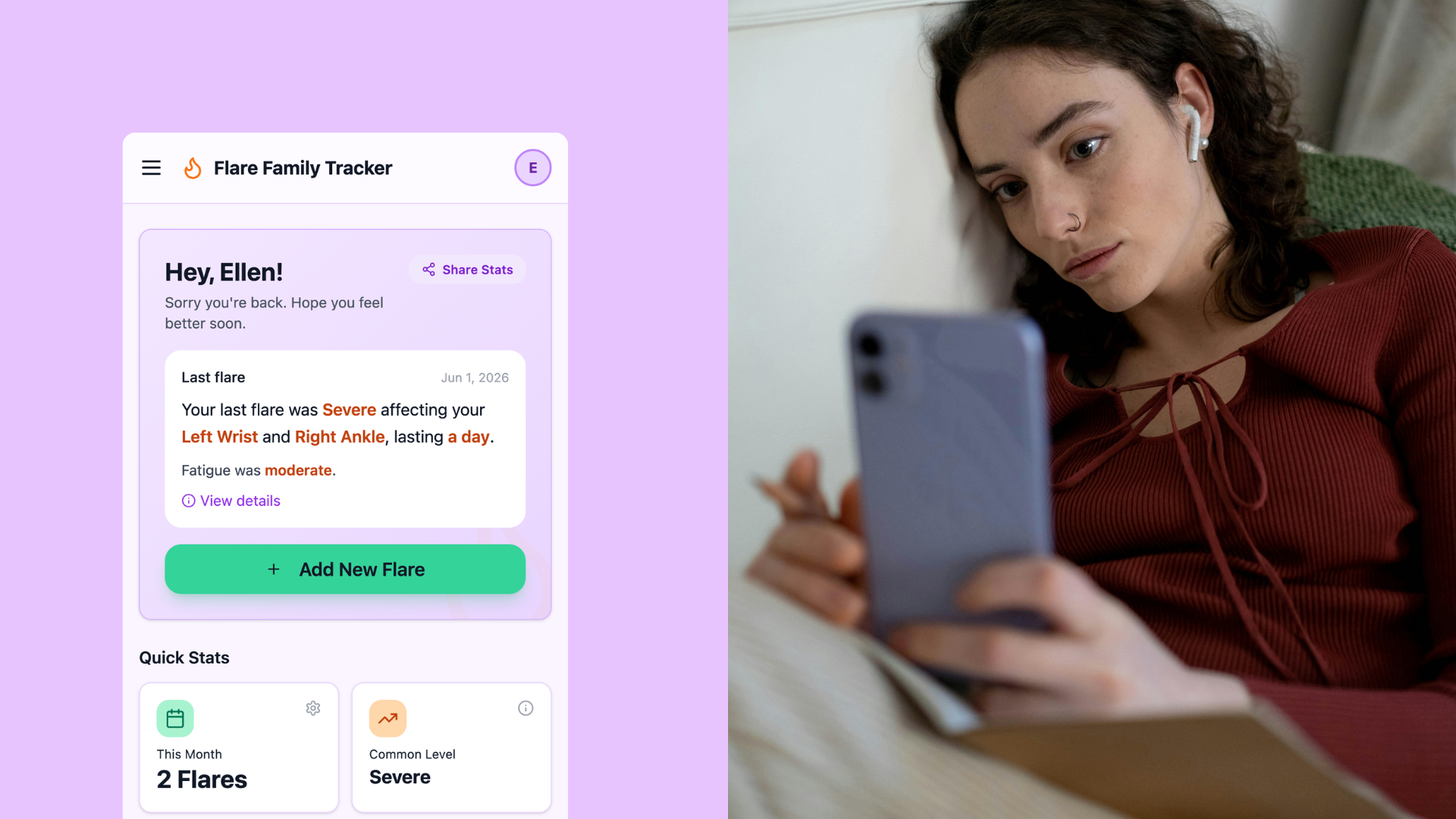
Tracking your flares is a good practice because it helps your doctors understand you, and most importantly it helps you understand yourself. Brain fog, mom brain, neurodivergence, and the busyness of life can make it really difficult to consistently track flares, which is why I created an app that doesn't penalize you for imperfect tracking. It's free to use and worth a try if you're interested in tracking.
If you live with rheumatoid arthritis and struggle to explain your flares to others, you’re not alone.
And if you’re someone trying to understand what a loved one is experiencing — thank you for wanting to learn.
You can find free, easy‑to‑read downloadable resources on FlareFamily.com that explain how RA flares work and help start these conversations.
If you have questions, feel free to leave a comment or reach out. Understanding is powerful — and it’s something we all deserve.

Meet Ellen, a chronic illness advocate and the founder of Flare Family. Since developing Rheumatoid Arthritis in 2010, she's dedicated herself to empowering others navigating similar journeys through her TikTok account, @ellenwitharthritis. Led by compassion, she is working to build a community where everyone feels heard, understood, and uplifted.
Ellen is a graphic and web designer who enjoys spending time with her partner, Jarrod, and soul dog, Dolly. Her not so guilty pleasures are Bravo reality shows, donuts, and finding great hiking spots.
%20(1).png)
You don't need dates, specifics, good memory, or good habits to create a powerful picture of flare patterns.
Have questions about Flare Family? Need advice about living with Rheumatoid Arthritis? I'm here to connect with you and answer your questions!
Are you a writer? Do you have a story to tell or advice to give? I'm always looking for guest authors. If you're interested in writing a blog post for Flare Family, contact me via email or this form.
ellen@flarefamily.com


.png)
.png)