If you’ve lived with Rheumatoid Arthritis for more than a few months, you’ve probably sat in an exam room and been handed the same piece of homework: “If you can keep a log of your symptoms and flares that would be really helpful at our next appointment.”
It sounds reasonable when a doctor says it. But anyone who has actually lived through a severe RA flare knows how laughably out of touch that advice can feel.
Think about what happens when a real flare hits. Your joints freeze up. Your hands curve inward into a stiff, painful claw that refuses to unfurl. Systemic exhaustion takes over your entire body, and a heavy, suffocating layer of brain fog settles over your mind. On those days, it takes twenty minutes just to figure out how to get a hairbrush through your hair or slide a shirt over your shoulders. By 6 PM, you are completely out of gas.
And yet, traditional tracking apps expect you to sit down on those exact nights and answer twenty meticulous, minute-by-minute questions. They want precise information, exact timestamps, and unbroken daily login streaks.
When you physically and mentally cannot open the app for four days, you are met with a broken calendar grid, a massive gap in your history, and a subtle wave of digital guilt. You end up deleting the app, feeling like you failed.
Traditional tracking apps fail chronic illness patients because they demand perfect habits from people who are actively hurting. You need a tool that treats you like a human being experiencing a hard thing. Here is what realistic tracking should actually look like.
When severe inflammation spikes, short-term memory is often the first thing to dissolve. Trying to retroactively piece together your medical timeline through a fog of exhaustion is an anxiety-filled nightmare.
“Wait, did my left wrist start throbbing on Tuesday morning, or was that Wednesday afternoon?” “Was my morning stiffness lasting two hours or three?”
Trying to force yourself to remember exact numerical metrics or calendar dates when your brain is scrambled is exhausting. Your tracking system should adapt to your memory, not the other way around.
Instead of demanding an exact date and hour, a realistic tracker should let you log a flare using flexible, natural human language. You should be able to hop on after the worst has passed and simply say: “I had a severe flare that hit my right knee and wrist, and it lasted for a few days last week.” Stripping away the pressure of exact dates doesn't ruin your data—it keeps your history honest without draining your remaining mental energy.
Living with a fluctuating autoimmune disease means your capacity changes without your permission. You have peaks of relative comfort followed by sudden valleys where everything falls apart. Forcing yourself into a hyper-strict, daily logging routine on a bad day creates unnecessary pressure. And stress is one of the ultimate triggers for physical inflammation.
The data that actually helps your rheumatologist understand your baseline isn't a flawless grid of daily check-ins. It's the macro-view of your systemic flares over time. Missing days or weeks shouldn't break your chart or render your profile useless. You need a framework that accommodates your life, keeping your history cohesive even if you only have the energy to check in a couple of times a month.
Navigating chronic illness is already an incredibly expensive reality. Between specialists, physical therapy, and prescription copays, the absolute last thing an RA patient needs is to hit a corporate digital paywall just to look at their own health patterns.
Far too many apps lure you in with a basic calendar layout, only to lock your analytics, custom symptom inputs, or data summaries behind a monthly subscription fee. Your health data belongs entirely to you. Accessing the insights necessary to advocate for your own care should never require a recurring credit card charge.
The real test of any symptom log happens in the fifteen minutes you get with your rheumatologist. Under the ticking clock of an appointment, brain fog can make it near impossible to clearly articulate what the last three months actually felt like. You shouldn't have to scramble through loose pages of notebooks or show an unreadable app graph to a busy doctor.
Instead, your tracking tool should do the translating for you. By taking your casual, conversational inputs and organizing them into a structured, professional summary, you can simply print it out or show your screen. This bridges the communication gap instantly, helping your medical team see your reality and adjust your treatment plan efficiently.
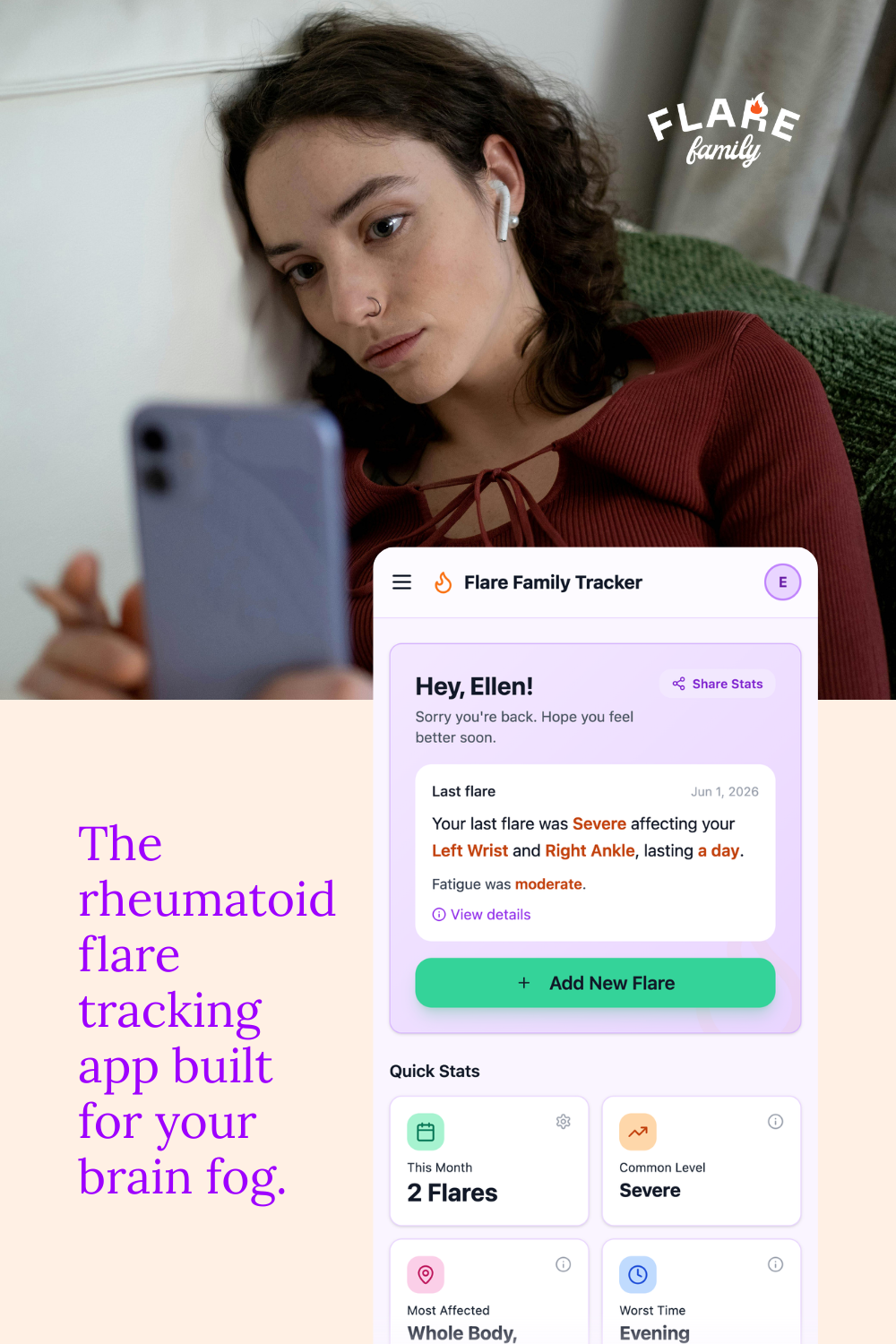
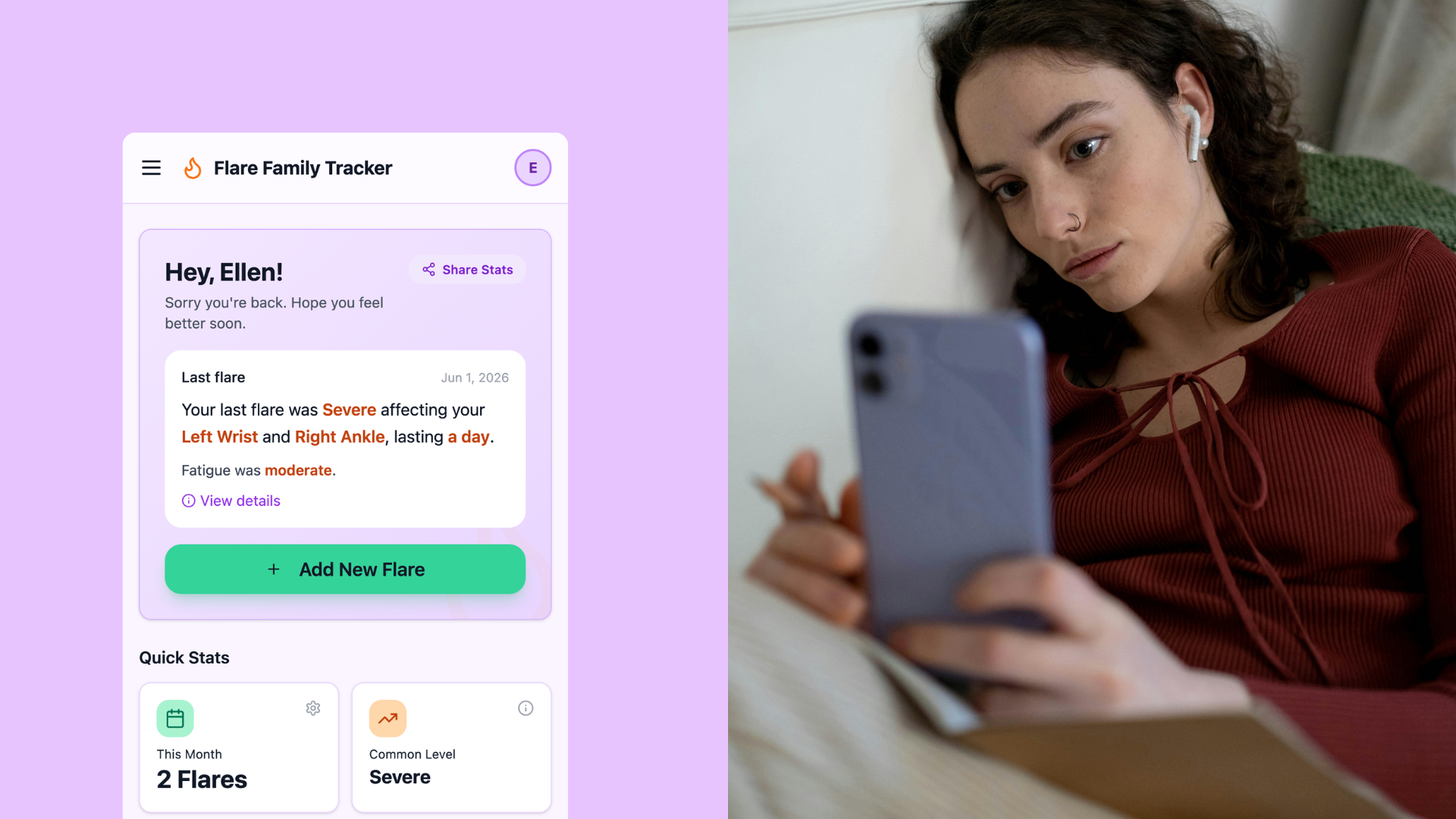
If you are tired of tracking tools that feel like they were built for completely healthy people, we built Flare Family Tracker to give you a different option.
I created this app because I wanted a tracker designed specifically around the realities of joint pain and cognitive exhaustion:
You don't need a perfect memory or perfect habits to build a powerful clinical picture of your patterns. Head over to app.flarefamily.com to check out the tracker layout, log your first flare, and discover how gentle tracking can actually be.

Meet Ellen, a chronic illness advocate and the founder of Flare Family. Since developing Rheumatoid Arthritis in 2010, she's dedicated herself to empowering others navigating similar journeys through her TikTok account, @ellenwitharthritis. Led by compassion, she is working to build a community where everyone feels heard, understood, and uplifted.
Ellen is a graphic and web designer who enjoys spending time with her partner, Jarrod, and soul dog, Dolly. Her not so guilty pleasures are Bravo reality shows, donuts, and finding great hiking spots.
You don't need dates, specifics, good memory, or good habits to create a powerful picture of flare patterns.
%20(1).png)
Have questions about Flare Family? Need advice about living with Rheumatoid Arthritis? I'm here to connect with you and answer your questions!
Are you a writer? Do you have a story to tell or advice to give? I'm always looking for guest authors. If you're interested in writing a blog post for Flare Family, contact me via email or this form.
ellen@flarefamily.com


.png)