If you’ve recently been diagnosed with rheumatoid arthritis, or you’re in the diagnosis journey right now, tracking flares may be something you’re interested in.
Tracking flares has benefits but is often made difficult by your symptoms, habits, or the way you’re trying to track.
As someone who has lived with RA for over 16 years and been a patient under eight rheumatologists, here’s the wisdom I can share with you:
Autoimmune diseases are complex — like, incredibly complex. That complexity is further complicated by the fact that many diseases mimic each other. Sometimes there is only a single symptom or test that differentiates one condition from another.
Because of this fact, rheumatologists may focus more on a single symptom — like morning stiffness — rather than your pain levels and every other symptom you’re tracking.
At your first appointment, or your next appointment, directly ask your rheumatologist what they would like you to track. Your efforts to track will be in vain if you’re not logging the information that’s actually helpful.
This should be a relief to you. Many flare tracking apps and journals want you to log symptoms daily. While this is fine and can be helpful for certain situations that your doctor is monitoring, life-long diseases like rheumatoid are often about the greater picture over long periods of time.
Don’t worry about creating a daily habit of logging every symptom you experience. Just keep a log of the important things with approximate dates and time periods.
For example, your rheumatologist knowing you had a moderate flare in your hands with swelling and symmetry back in January is better information than 9 days of perfectly logging your pain and fatigue just to become burned out.
The main goal of treatment is to bring your disease under control so you can actually live life. Perfect remission isn’t realistic for everyone, but your rheumatologist having a picture of how the disease is impacting your daily life can help guide treatment.
Maybe logging every symptom is overwhelming, but being able to tell your rheumatologist that you missed a week of work and couldn’t get dressed is worthwhile. Obvious metrics like this clearly communicate to your rheumatologist that your current treatment may not be working.
Some folks like pen and paper, some folks like the ritual of logging daily. Other folks (like myself) have a difficult time tracking flares because of brain fog, symptoms of ADHD, and the busyness of life.
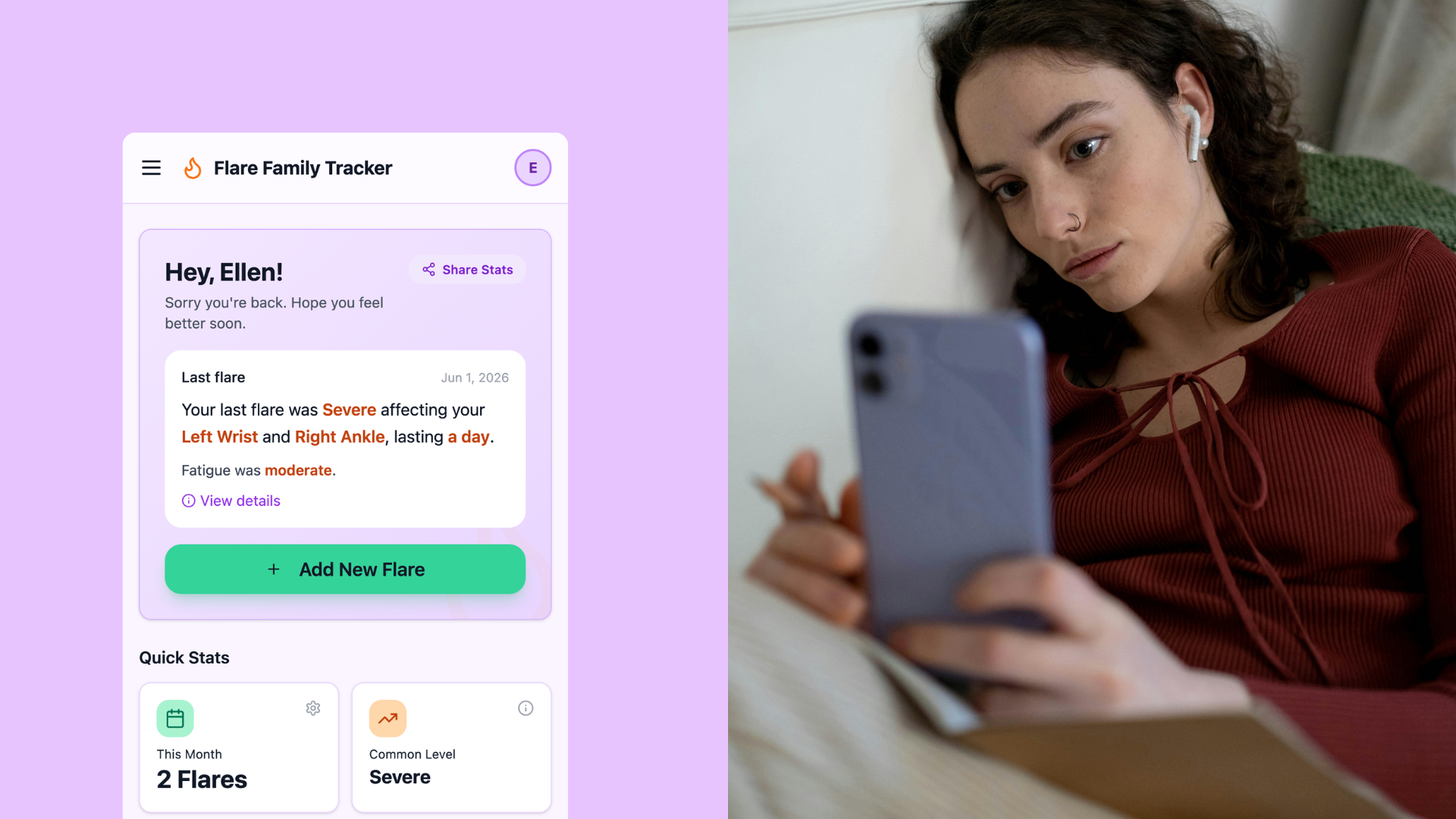
Apps like Flare Family Tracker were designed for brain fog and allow you to log flares from any timeframe, summarize the important symptoms for your rheumatologist, and provide powerful analytics that give you insight into specific symptoms. It also allows you to track lifestyle plans so you can see how your current combination of medication, diet, exercise, and mental health practices stack up against past treatments. You can use Flare Family Tracker for free to log flares.
I’ll conclude by reminding you of the most important thing — ask your rheumatologist what they want to see. Track those things. If the symptoms you want to track aren’t included in the Flare Family Tracker, just email me at ellen@flarefamily.com and we can get it added into the next app update.
Let me know if you have questions! I’m always here to chat. Feel better soon.

Meet Ellen, a chronic illness advocate and the founder of Flare Family. Since developing Rheumatoid Arthritis in 2010, she's dedicated herself to empowering others navigating similar journeys through her TikTok account, @ellenwitharthritis. Led by compassion, she is working to build a community where everyone feels heard, understood, and uplifted.
Ellen is a graphic and web designer who enjoys spending time with her partner, Jarrod, and soul dog, Dolly. Her not so guilty pleasures are Bravo reality shows, donuts, and finding great hiking spots.
%20(1).png)
You don't need dates, specifics, good memory, or good habits to create a powerful picture of flare patterns.
Have questions about Flare Family? Need advice about living with Rheumatoid Arthritis? I'm here to connect with you and answer your questions!
Are you a writer? Do you have a story to tell or advice to give? I'm always looking for guest authors. If you're interested in writing a blog post for Flare Family, contact me via email or this form.
ellen@flarefamily.com


.png)
.png)