
01.
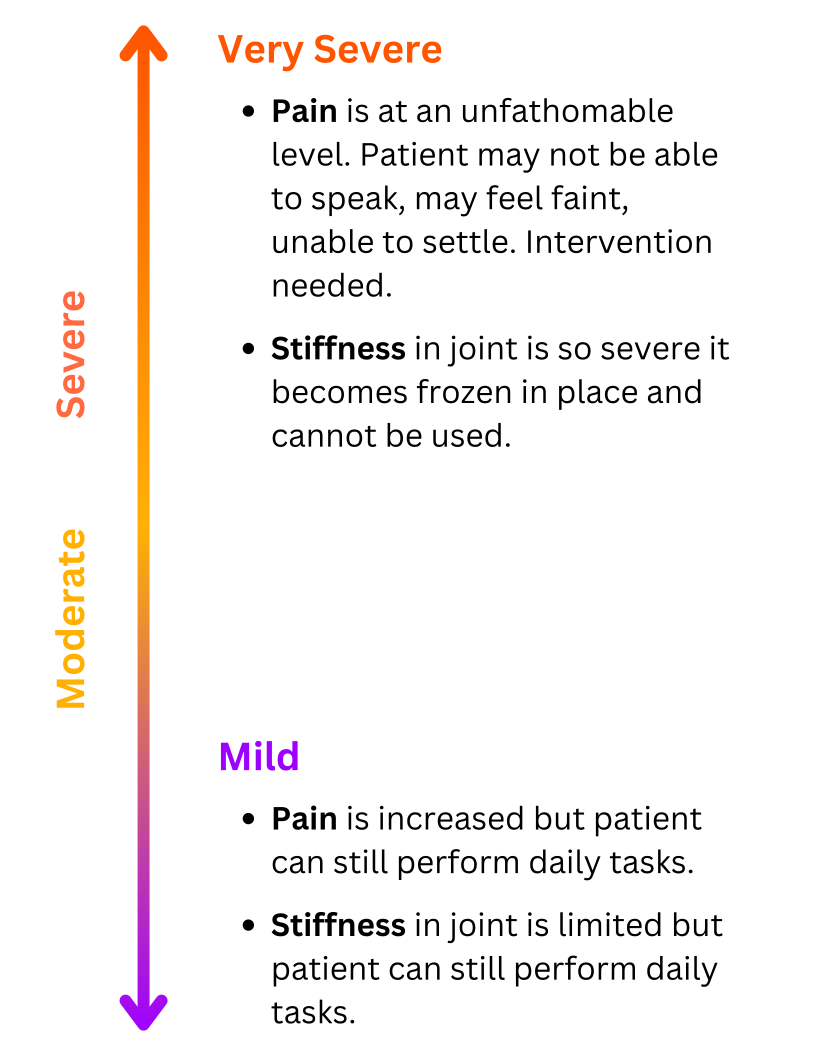
People with RA live with what they consider a normal level of symptoms. Any increase in frequency or severity of these symptoms is called a flare.
Flares can include some or all of the symptoms of Rheumatoid Arthritis. The most troublesome are often the combination of joint pain and stiffness which cause temporary disability.
Flares reflect a period when inflammatory activity increases, which may be measurable through symptoms, joint exam findings, or lab markers such as ESR or CRP.
People who do not live with Rheumatoid Arthritis may be surprised to learn how much pain an RA patient can endure.
They may also be surprised to learn that swelling can lock joints in place, leaving the patient unable to move entire parts of the body.
02.
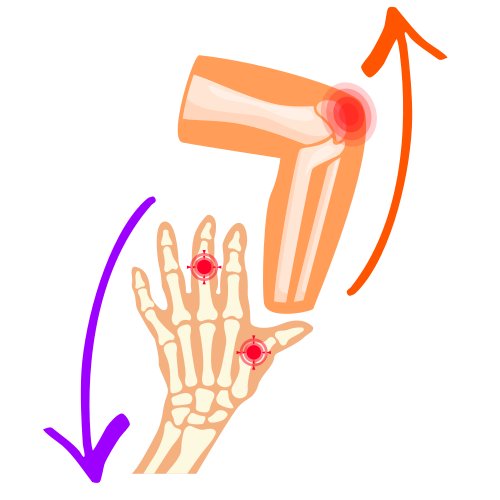
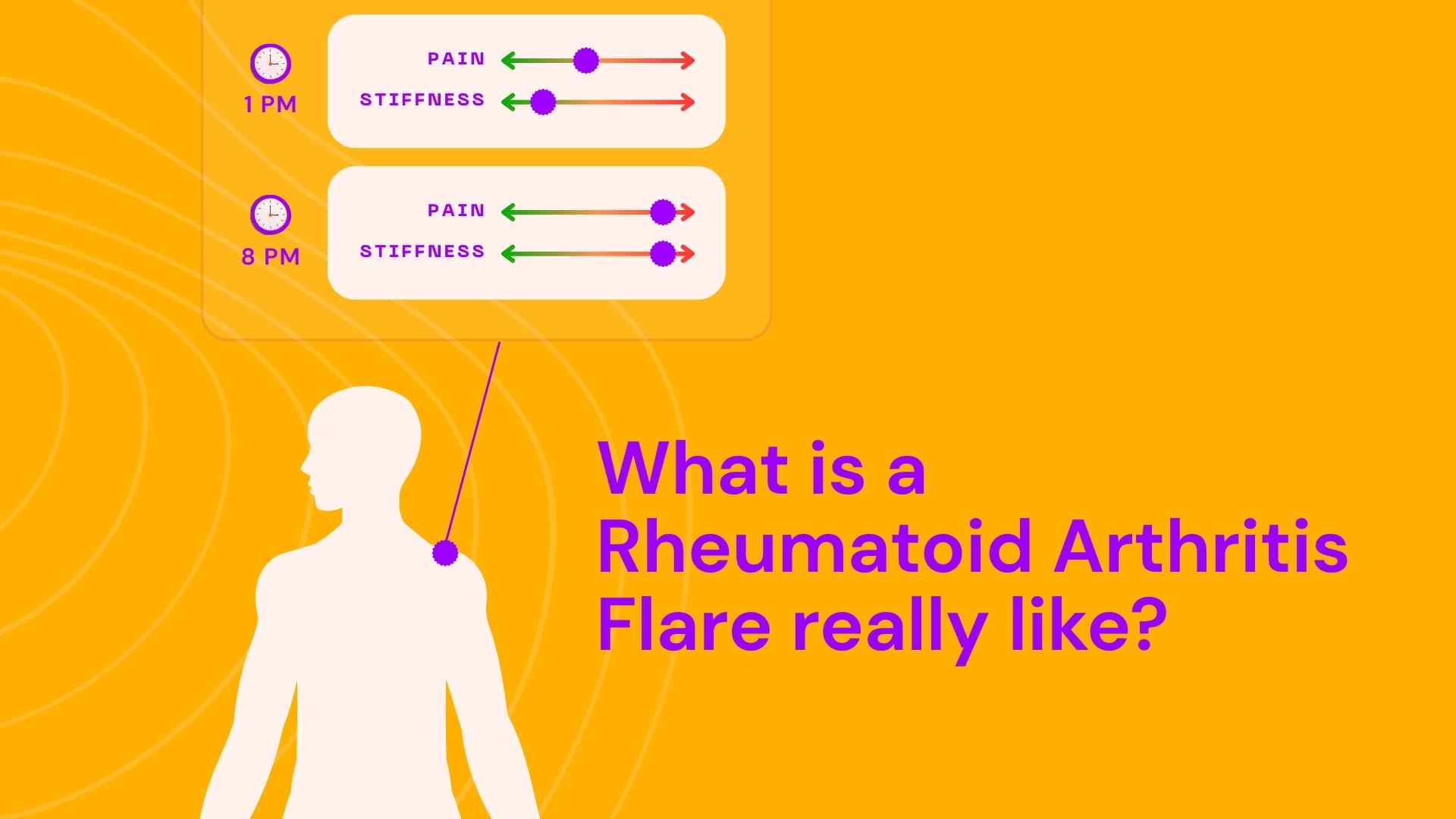
Pain and stiffness levels can vary between joints, and the severity of those levels can change quickly.
If the elbow and knee are in a flare, they might have wildly different levels of pain and stiffness throughout the day.
New joints can quickly become part of the flare, while other joints seem to magically get better.
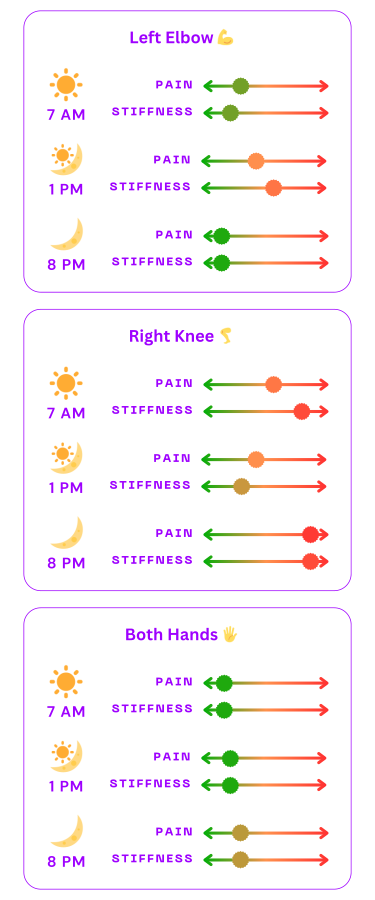
The chart below provides a visual of how each joint can change throughout the day.
The left elbow started mild, became worse in the afternoon, then got better around evening.
The right knee started severe, got a little better in the afternoon, then became very severe in the evening.
The hands sustained mild levels of pain and stiffness throughout the day.

03.
"I have to cancel, sorry."
"I won't be able to make it to work."
"I'm so sorry, I need to back out of my commitment."
These are unfortunate realities for RA patients because flares can begin suddenly — sometimes in less than an hour.
Flares can also resolve rapidly, sometimes going away overnight.
This rapid change can feel confusing and discouraging, especially if someone was previously well controlled on medication.
People living with RA are often mislabeled as flaky, unreliable, lazy, or liars because it's hard to believe a body can change so quickly.
Flares can last hours, days, weeks, or months.
04.
During a flare, everyday tasks can become difficult or impossible:
RA flares often reduce physical function because inflamed joints lose mobility. The increased pain and stiffness can make routine self-care or work tasks temporarily impossible.
This temporary loss of function is a recognized aspect of active disease and is part of how rheumatologists assess disease severity.
05.
While flares themselves are temporary, uncontrolled inflammation over time can cause permanent joint damage.
The National Institute of Arthritis and Musculoskeletal and Skin Diseases explains that persistent inflammation can erode cartilage and bone. Repeated or prolonged flares increase the risk of:
This is why modern RA treatment focuses on achieving remission or low disease activity — not just symptom relief, but prevention of long-term damage.

06.
OTC pain medication and at-home therapies like cold packs do a good job at relieving symptoms in a mild flare.
Moderate to severe flares are often impossible to treat effectively at home. OTC NSAIDS and at-home therapies are not strong enough to combat the pain and joint stiffness.
Persistent and severe flares often require medical intervention. This may include:
Home remedies may support comfort — but they cannot stop autoimmune-driven inflammation on their own. It is imperative that RA patients reach out to their rheumatologist when a flare feels unmanagable at home.
07.
Flares often signal that rheumatoid arthritis is not fully controlled.
Rheumatologists assess disease activity using:
Frequent flares may indicate the need to adjust treatment. The American College of Rheumatology supports a “treat-to-target” approach — meaning therapy is adjusted until remission or low disease activity is achieved.
In other words: flares are clinically meaningful. They are not imaginary. They are not exaggerations. They are evidence of active disease.

08.
Many patients report triggers such as:
However, research shows that flares can occur without an identifiable cause. Sometimes the immune system simply becomes more active without a clear external trigger.
This unpredictability can feel frustrating — but it does not mean someone did something wrong.
09.
The information on this page is based on guidance and research from leading medical and public health organizations. Rheumatoid arthritis is a complex autoimmune disease, and this content is intended for education — not medical diagnosis or treatment.
American College of Rheumatology. (2021). 2021 American College of Rheumatology Guideline for the Treatment of Rheumatoid Arthritis. Arthritis Care & Research, 73(7), 924–939.
https://rheumatology.org/rheumatoid-arthritis-guidelines
American College of Rheumatology. Rheumatoid Arthritis.
https://rheumatology.org/patients/rheumatoid-arthritis
Arthritis Foundation. Rheumatoid Arthritis.
https://www.arthritis.org/diseases/rheumatoid-arthritis
Arthritis Foundation. Managing RA Flares.
https://www.arthritis.org/health-wellness/treatment/treatment-plan/disease-management/managing-ra-flares
National Institute of Arthritis and Musculoskeletal and Skin Diseases (NIAMS). Rheumatoid Arthritis.
https://www.niams.nih.gov/health-topics/rheumatoid-arthritis
National Institute of Arthritis and Musculoskeletal and Skin Diseases (NIAMS). Rheumatoid Arthritis: Diagnosis, Treatment, and Steps to Take.
https://www.niams.nih.gov/health-topics/rheumatoid-arthritis/diagnosis-treatment-and-steps-to-take
Smolen, J. S., Landewé, R. B. M., Bijlsma, J. W. J., et al. (2020). EULAR recommendations for the management of rheumatoid arthritis with synthetic and biological disease-modifying antirheumatic drugs: 2019 update. Annals of the Rheumatic Diseases, 79(6), 685–699.
https://ard.bmj.com/content/79/6/685



.png)

.png)
.png)
.png)